

Pricing Everything in Bitcoin
My New Investment Philosophy

I started my career on Wall Street, working for the asset management division of Goldman Sachs. Managing client money involved understanding client risk tolerances, designing & constructing sophisticated portfolios that aimed to achieve client objectives, regular portfolio rebalancing to incorporate market changes & timely and accurate reporting.
In studying for my CFA & MBA, modern investment portfolio theory was literally drilled into my head; a theory that states portfolio diversification – typically using the 60/40 rule (60% equities, 40% fixed income) - is the best means of achieving long term investment success. Within the two asset classes (of equities & bonds) one utilizes diversified portfolios therein (the whole index funds versus active managed funds is a topic for another time).
In short, portfolio diversification across multiple asset classes and industries within each asset class was the most widely accepted investment strategy to build wealth for the average Joe … and institutional. And it by and large remains so to this day.
Over the years of managing my own money, I’ve tinkered with different strategies – but primarily remained within the above investment philosophy. Along the way, however, I learned a few sub strategies that worked well for me:
Technology stocks outperform the general market due to economic “moats” - competitive advantages - that proprietary tech creates & that can be leveraged into virtual monopolies. Monopolies produce higher returns than the market average.
Don’t sell “winners” to buy “losers” – i.e., portfolio rebalancing by selling overweighted tech companies, like Apple and Google, that performed better than the market to buy, say, industrial companies whose future is less robust is, to put it mildly, shear madness.
Cash yielding assets like real estate not only produce new investable cash every year but the underlying asset also hedges well against a depreciating fiat currency.
A bit of gold and silver are great long-term chaos hedges. Nothing beats a good night’s sleep knowing one has an adequate level of portfolio hedges in place. Call me old fashioned .
Lastly, the tortoise versus the hare analogy rung true; namely, that wealth is best created over long periods of time, with only a minority percentage of one’s portfolio devoted to the homerun (and fun!) “hare-type” plays.
Then, in 2014, I discovered a “digital asset” called Bitcoin … and my world changed forever.
Since inception, Bitcoin’s cumulative growth has exceeded 20,000,000%. Over the past decade, from April 2015 to March 2025, Bitcoin’s annualized return was 79%. In other words, Bitcoin has been humanity’s best returning asset in history.
And we’re still in its very early days.
I’ve written about Bitcoin before so won’t repeat myself here. Rather, I’ll just highlight a few themes that attracts me still to this “King of Crypto”:
Econ 101: a story of simple supply & demand. Only 21 million bitcoin will ever be mined; of which 19.7 million has already been mined. No one really knows for certain how many bitcoin have been lost over time (losing private keys – devastating) but I’ve seen estimates of 1 – 2 million coins, lost forever.
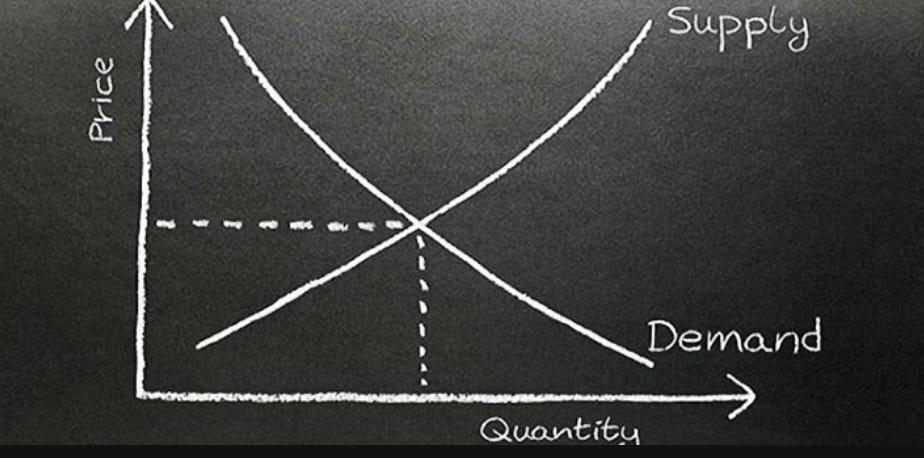
Thus, I present the (quite limited) supply side of the Bitcoin equation.
Up until 2024, most bitcoin demand (price increases) came from retail investors. That changed with the ETFs launched early in 2024 where institutional investors finally had a product that enabled them to easily buy into Bitcoin exposure. Sovereigns also became interested in Bitcoin, kicking off the “Great Game of Geopolitics” – i.e., FOMO at the country level. The US’ SBR, El Salvador using Bitcoin to emerge from poverty, the UAE & Norwegian sovereign wealth funds to diversify and add some alpha to their portfolios, Russia using Bitcoin for global commodity transactions, etc.
Thus the demand side potential … astronomical in size; and unprecedented. The greatest macro trade in history.
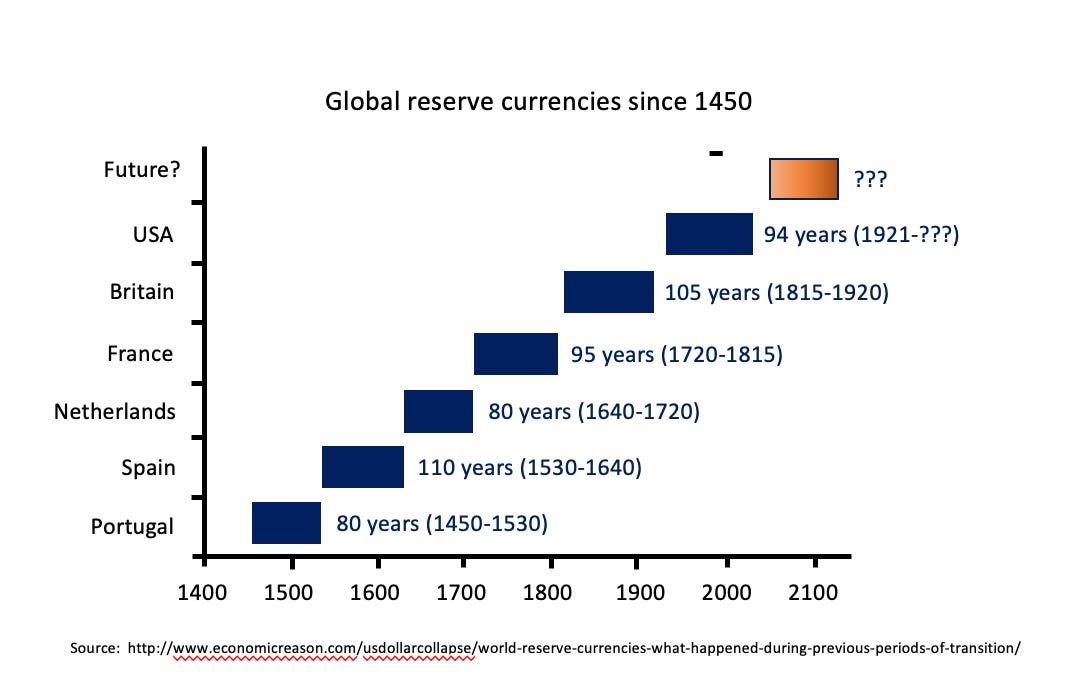
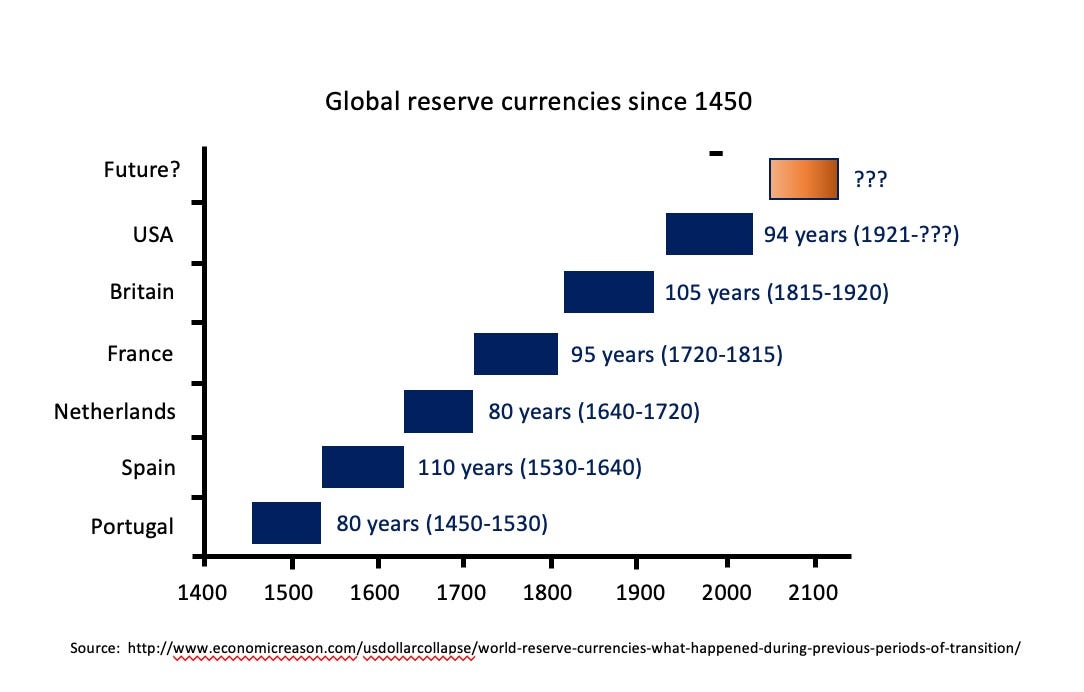
Our Broken Debt-Based Fiat System: All fiat currencies fail. And all world reserve currencies are ultimately replaced (Portugal to Spain to Holland to France to the UK and now the US). What is next? My bet is it will be Bitcoin.
AI Leveraging Bitcoin: AI will generate enormous economic value for humanity (for the purposes of this article, I conveniently ignore the perils that AI also may create for humans :). Before long, AI will communicate, partner with, create & transact with other AI directly, cutting out the slow link represented by humans(!) My belief is that Bitcoin will become the payment layer for AI transacting & transferring economic value amongst itself.
Unassailable, Immutable, Decentralized. The Bitcoin Blockchain.
With that as the backdrop, what is pricing things in Bitcoin? And why?
“Everything goes to Zero against Bitcoin” is a phrase associated with Max Keiser. I have created – and adhere to – a variation to Max’s phrase when applied to my own investing: “all deals must be priced in Bitcoin terms”. What I mean by that is (assuming portfolio allocations are appropriate), all new investment opportunities need to be as attractive - or exceed – that what I expect from Bitcoin. Otherwise, I would be destroying value.
As noted above, Bitcoin has averaged 79% annualized return over the past decade. Whereas I don’t believe Bitcoin can continue producing returns at this level, a ~40-50% return per annum is reasonable in my view until 2030.
In my experience, only select VC investments can achieve such a return.
My current start-up Greenspar.x focuses on the lucrative & exciting field of large-scale battery energy systems development (with a compliment of solar PV development). My partners & I believe we can generate 8-10x money over the next five years, whereas investing in bitcoin will produce 1.55 = 7.59375x money.
Greenspar.x > than buying Bitcoin.

Welcome to my world of genXalpha, where genX represents my generation whilst alpha refers to the excess financial return above an appropriate risk-adjusted discount rate; an investment strategy's ability to beat the market … ~95+% of which is going to zero against Bitcoin.
Stay humble; stack sats.
And contact us at Greenspar.x (info@greensparx.io) if you’re interested in investing in a more attractive play than bitcoin.
Even though a lot of businesses now claim to accept Bitcoin as payment, I’ve never seen anyone actually dumb enough to use it. Bitcoin isn’t stable,there are just too many factors behind its price swings.
Plus, there’s nothing tangible or monetary backing it, so it’ll never have the same market liquidity as USDT or other stablecoins.
The way I see it, the U.S. is only pushing and hyping up Bitcoin as a way to pay off its debt.
Great article John - fully agree. One of the reasons I am heading to Bitcoin 2025 at the end of the month.. to fully immerse myself in all things Bitcoin.